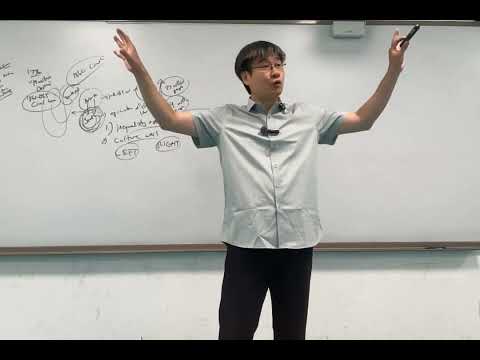
Geo-Strategy #1: Iran's Strategy Matrix
 Jiang Xue QinApr 10, 2026
In 2002, the Pentagon ran a massive war game, the Millennium Challenge, simulating an American invasion of Iran. Despite the unparalleled power of the US military, the 'Iran' side, playing as an inferior force, won the first engagement using asymmetrical tactics. This surprising outcome led the US military to restart the simulation, declaring such tactics 'cheating.' This striking historical footnote reveals the core tension in the looming conflict between dominant military powers like the United States and Israel, and a strategically agile adversary like Iran: can overwhelming conventional might overcome a foe determined to dictate the terms of engagement through unconventional means?
More from Jiang Xue Qin
Civilization #15: The Myth-Making Genius of Julius Caesar
Published 2 days agoDespite his unparalleled military victories and sweeping reforms designed to restore stability to Rome, Julius Caesar was assassinated in 44 BCE by his closest friends and allies. His radical success in shaping a new vision for the Republic inadvertently generated profound discomfort and anxiety among the old guard. Caesar's attempts to 'make Rome great again' by crafting a new reality challenged deeply ingrained Roman identities and traditions, creating an unresolvable tension that ultimately led to his violent demise.
Geo-Strategy #11: The Second American Civil War
Published 6 days agoFour of the world's five most powerful air forces are branches of the United States military—the Air Force, Navy, Army, and Marines—dwarfing all other nations save Russia at third place. This staggering over-militarization reflects a deeper American affinity for violence, a trait embedded in its historical conflicts from the 1776 Revolution to its deadliest war, the 1861 Civil War, which claimed up to a million lives. Today, with national narratives crumbling, institutions losing all credibility, and profound societal divisions deepening, this inherent inclination for violent resolution threatens to ignite a second, far more chaotic civil war. Can a nation so steeped in conflict find a path to unity when its foundational bonds are dissolving?
Geo-Strategy #10: Putin's Strategic Imagination
Published 6 days agoAlarmingly, a quarter of young Americans now reportedly view Osama bin Laden as a positive figure, a stark illustration of the deep civil dissent fracturing the nation. This erosion of binding myths, coupled with significant foreign policy overextension in conflicts like Ukraine and Gaza, and a soaring national debt of $35 trillion, exposes what some identify as critical vulnerabilities of the American Empire. Against this backdrop, a compelling argument suggests that Vladimir Putin is not merely reacting to events but orchestrating a sophisticated, multi-front strategy to accelerate America’s decline. But what allows Russian leaders to conceive and execute such long-term, counterintuitive geopolitical maneuvers, seemingly invisible to a West bound by different strategic principles?